Blog
×
LANGUAGE
日本語
English
한국어
繁體中文
简体中文
ภาษาไทย
Tiếng Việt


Tokyo is a city where a short train ride changes the scenery completely. Within a radius you can leave in the morning and return by evening, there is coast, mountain, hot spring and old townscape. This article covers 20 day-trip destinations reachable by rail from Tokyo or Shinjuku Station, organised by direction.
All journey times given here are estimates. Actual times vary by train type and connection waits, so check timetables or a route planner before setting out.
Day trips are easier to narrow down by "how long you are willing to spend on the outbound journey" than by distance. Roughly three brackets:
For destinations using limited express or Shinkansen services, seat availability can determine your departure time. It helps to fix the skeleton of the day first.
Temples, shrines and the sea within easy reach of one another — the standard day trip from Tokyo. Walking from Tsurugaoka Hachimangu along Komachi-dori and out towards Hase will fill a day on its own.
Journey time: about 1 hour from Tokyo Station. Route: JR Yokosuka Line from Tokyo Station to Kamakura. From Shinjuku, the Shonan-Shinjuku Line.
The whole island functions as a walking route — the caves, the observation lighthouse and the shops along the approach make up about half a day. Many people combine it with Kamakura.
Journey time: roughly 1 to 1.5 hours from Shinjuku including connections. Route: Odakyu Line from Shinjuku to Katase-Enoshima. From Kamakura, the Enoshima Electric Railway.
The Minato Mirai waterfront, Chinatown and the Western-style houses of Yamate — districts of different character, linked on foot and by rail. It also holds up well in poor weather.
Journey time: around 30 minutes from Tokyo Station. Route: JR Tokaido or Keihin-Tohoku Line to Yokohama, then the Minatomirai Line towards the waterfront.
Hot springs, Lake Ashi and museums concentrated in one mountain area, connected by a mountain railway, cable car and ropeway.
Journey time: about 1.5 hours from Shinjuku to Hakone-Yumoto. Route: Odakyu Romancecar limited express from Shinjuku. Alternatively, Shinkansen from Tokyo Station to Odawara and change there.
Known as "Little Edo" for its surviving kurazukuri storehouses and Kashiya Yokocho, the confectioners' alley. Its proximity makes it feasible even from the afternoon.
Journey time: about 30 minutes from Ikebukuro. Route: Tobu Tojo Line express from Ikebukuro to Kawagoe in about 30 minutes; Seibu Shinjuku Line from Seibu-Shinjuku to Hon-Kawagoe in about 45 minutes by Koedo limited express or 60 by express; JR Kawagoe Line from Omiya in about 20 minutes (per Kawagoe City's official site).
A town in a mountain basin, known for Chichibu Shrine, its pilgrimage circuit and Hitsujiyama Park. The limited express runs direct.
Journey time: about 80 minutes from Ikebukuro to Seibu-Chichibu by limited express. Route: the Laview limited express on the Seibu Ikebukuro Line, calling at Ikebukuro, Tokorozawa, Iruma-shi, Hanno, Yokoze and Seibu-Chichibu.
A scenic stretch of the Arakawa lined with flat rock formations, known for river boat trips. It can be combined with Chichibu in a single day.
Journey time: around 100 minutes from Ikebukuro including connections. Route: Seibu Ikebukuro Line limited express to Seibu-Chichibu in about 80 minutes, then the Chichibu Railway from Ohanabatake in about 20. Alternatively, the Chichibu Railway from Kumagaya on the JR Takasaki Line, about 50 minutes (per the Nagatoro Town Tourism Association).
A high-altitude hot spring town where inns and public baths gather around the yubatake hot water field. Day visitors can use the baths, but the journey is long, so an early start suits.
Journey time: around 3.5 hours from Tokyo including connections. Route: JR limited express from Ueno or elsewhere to Naganohara-Kusatsuguchi, then a local bus. Highway buses also run from Shinjuku and Tokyo.
A mountain hot spring area on the upper Tone River, often visited alongside gorge walks and river activities. The Shinkansen brings it within day-trip range.
Journey time: around 2 hours from Tokyo Station including connections. Route: Joetsu Shinkansen to Jomo-Kogen, or the JR Joetsu Line to Minakami.
The shrine and temple complex including Nikko Toshogu, and beyond the Irohazaka switchbacks, Lake Chuzenji and Oku-Nikko. We have a separate article covering Nikko on its own.
Journey time: about 2 hours from Tokyo (per the Nikko City Tourism Association). Route: Tobu limited express from Asakusa to Tobu-Nikko. Through limited express services from Shinjuku, jointly operated by JR and Tobu, also run.
A hot spring town with inns lining the gorge, on the same Tobu line as Nikko.
Journey time: around 2 hours from Asakusa including connections. Route: Tobu limited express from Asakusa to Kinugawa-Onsen.
Known for gyoza, but the disused underground quarry in the Oya district on the outskirts is equally worth seeing. The Shinkansen keeps the journey short enough for half a day.
Journey time: around 50 minutes from Tokyo Station by Tohoku Shinkansen. Route: from the west exit of JR Utsunomiya Station, a bus towards Oya or Tateiwa takes about 30 minutes, with the Oya History Museum about 5 minutes' walk from the stop (per the museum's official site).
A vast coastal park known for seasonal flower landscapes — nemophila in spring, kochia in autumn. Peak season is busy, so arriving in the morning suits.
Journey time: around 2 hours from Tokyo including connections. Route: JR Joban Line limited express from Shinagawa, Tokyo or Ueno to Katsuta, then a local bus.
Centred on Kairakuen, counted among Japan's three great gardens, and a walk around the adjacent Lake Senba. It is a calm place to spend time outside plum blossom season too.
Journey time: 1 to 1 hour 20 minutes from Shinagawa by limited express. Route: Ueno-Tokyo Line and JR Joban Line limited express to Mito. The Mito-go highway bus from Tokyo Station's Yaesu south exit takes about 2 hours (per the Mito Tourism and Convention Association).
A town on the Sotobo coast, centred on the aquarium and walks along the shore. Reachable by train or highway bus.
Journey time: about 2 hours from Tokyo Station. Route: JR Wakashio limited express or the Axy-go highway bus, about 2 hours. A free shuttle runs from Awa-Kamogawa Station to Kamogawa Sea World in about 10 minutes (per Kamogawa Sea World's official site).
At the southern tip of the Uchibo coast, with coastline and port-town scenery. Some visitors come in spring or autumn for the mild climate rather than in summer.
Journey time: around 2 to 2.5 hours from Tokyo including connections. Route: JR Uchibo Line to Tateyama. Highway buses also run from Tokyo Station and elsewhere.
A town that grew up as the approach to Naritasan Shinshoji, where you can walk both the shops along the approach and the extensive temple grounds. Its proximity to the airport makes it feasible on the morning of a departure.
Journey time: around 1 to 1.5 hours from central Tokyo. Route: Keisei Main Line from Keisei-Ueno or Nippori to Keisei-Narita, or JR Sobu Line rapid to Narita.
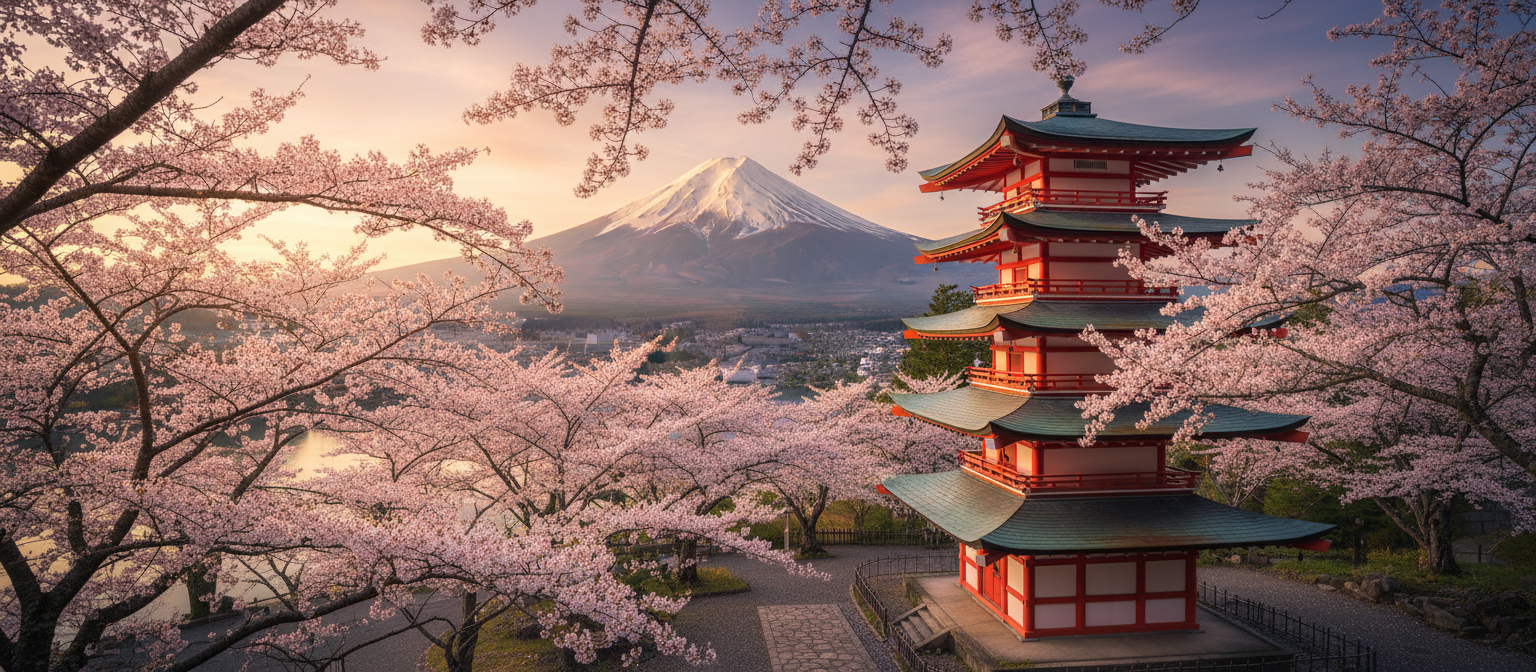
An area with views of Mt Fuji across the water, plus sightseeing boats and a ropeway. The mountain is not always visible, so check the forecast before setting out.
Journey time: around 2 hours from Shinjuku including connections. Route: JR Chuo Line to Otsuki, then the Fujikyuko Line. Direct limited express services and highway buses also run from Shinjuku.
A hot spring town with inns and shops on a slope above the sea. It has plenty of day-use bathing facilities, so even a short visit allows a soak.
Journey time: about 55 minutes from Tokyo Station by Shinkansen. Route: Tokaido Shinkansen from Tokyo Station to Atami, or the JR Tokaido Line.
The coastline continues south from Atami through hot spring towns and seaside villages. For a day trip, as far as Ito is comfortable; if you push on to Shimoda, fix your return train first.
Journey time: about 1 hour 40 minutes from Tokyo Station to Ito on the Odoriko limited express. Route: alternatively, Shinkansen to Atami in about 55 minutes, then the JR Ito Line to Ito in about 22 (per the Ito Tourism Association).
A few things worth keeping in mind.
Treat outbound journey times as estimates and leave slack in the plan. That, more than anything, is what makes a day trip end well.
Information in this article is current as of August 2026. Journey times, fares and opening arrangements are subject to change. Please check official information from each operator and facility before setting out.
 Facebook
 X (Twitter)
 LINE