


Blog
×
LANGUAGE
日本語
English
한국어
繁體中文
简体中文
ภาษาไทย
Tiếng Việt

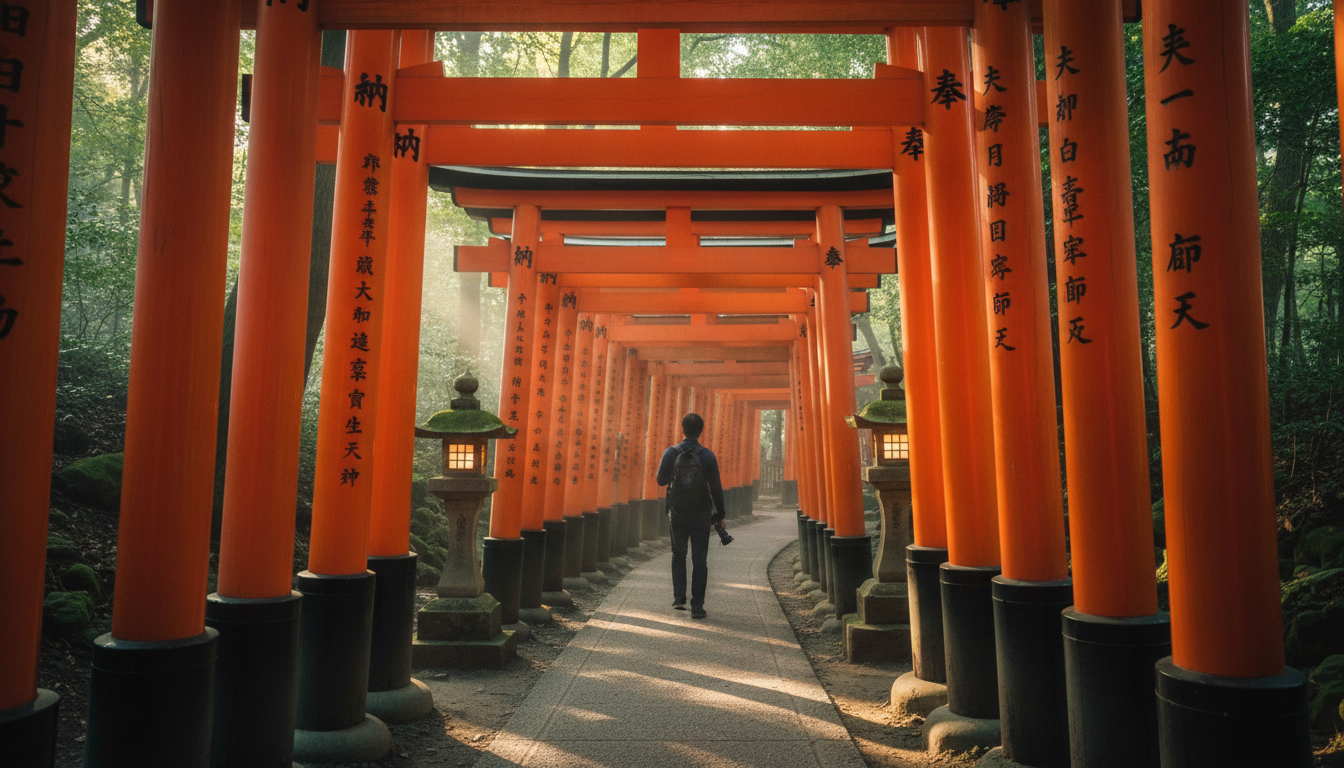
Kyoto is a city where the places you want to visit and how crowded they are on a given day don't always line up. The same temple or shrine can feel completely different depending on the season and time of day, and many of the "this isn't the Kyoto I imagined" reactions come not from the destination itself but from hitting it at a crowded moment. Drawing on information published by Kyoto City and the Kyoto City Tourism Association, this guide sets out the thinking and tools you can use to avoid the crowds. Rather than listing definitive "hidden quiet hours", the aim is to show you where to check conditions for yourself on the day.
Kyoto City has announced that it is working to spread out visitors along three axes: season, time and place. For season, there are the "Kyoto Summer Journey" and "Kyoto Winter Journey" campaigns aimed at the quieter summer and winter periods. For time, the city promotes the appeal of morning and evening sightseeing to ease daytime congestion. For place, it encourages visits to the many different areas across the city.
The key point is that Kyoto City itself says congestion "varies widely depending on season, time and place", and notes that there are areas where it would welcome more visitors. Kyoto is not crowded everywhere all the time. It helps to think of a crowd-avoiding trip not as giving up on Kyoto, but as rearranging your plans by shifting these three axes.
Kyoto City's official tourism site, Kyoto City Official Travel Guide (Kyoto Kanko Navi), has a page for avoiding congestion called the Kyoto Sightseeing Comfort Level Map. Select a date, time and weather, and it shows a five-level forecast of how comfortable sightseeing will be around popular spots in seven areas of the city.
The seven areas are Saga-Arashiyama, Gion-Kiyomizu, Fushimi, Kinugasa-Kitano-Nishijin, Philosopher's Path-Okazaki, Central Kyoto, and the Kyoto Station area, covering most of the places visitors tend to put on their list. The forecasts are reportedly calculated from big-data analysis of mobile phone location data, factoring in conditions such as weather and day of the week.
Using it is simple: decide which area you want to visit, then move the time slider for your planned date and watch how the comfort level changes. When things will actually be calm varies from day to day, so the most reliable approach is to check for yourself twice: once before you finalise your itinerary and again just before you set out.
The Comfort Level Map also streams real-time live camera footage for some spots. A forecast is only a forecast, so looking at the actual footage before leaving your accommodation lets you decide whether to change the order in which you visit places.
During the cherry blossom and autumn leaf seasons, limited-time streams are sometimes added. In spring 2026, for example, footage of Maruyama Park was streamed from a portable camera from March 24 to April 8, viewable on the Comfort Level Map as well as on the Kyoto City Tourism Association's official YouTube channel and the "Cherry Blossom Report" on Kyoto Kanko Navi. To protect personal privacy, the footage was broadcast at reduced resolution and was not recorded.
According to the annual data report published by the Kyoto City Tourism Association, the room occupancy rate of accommodation in the city in 2025 was 80.6%, up 2.8 points from 77.8% the previous year. Total foreign guest nights rose 14.6% year on year, and foreign guests made up 66.4% of all guests, the highest level since records began. The growing sense that it is hard to find a room is the flip side of these numbers.
At the same time, the same report also notes month-to-month ups and downs. In March 2025, figures fell slightly below the same month of the previous year because the cherry blossoms peaked late. It is not that "it's crowded because it's cherry blossom season" but that "it's crowded because it coincides with peak bloom", so the same date can look very different depending on how the blossoms are progressing. If cherry blossoms or autumn leaves are your goal, rather than fixing a date first, you will have a more comfortable time if you keep a few days of flexibility while watching the bloom forecasts.
City buses are where many visitors run into trouble getting around Kyoto. The Kyoto Municipal Transportation Bureau introduces anti-congestion measures during tourist seasons. In spring 2026, route 106 towards Higashiyama ran every 3 to 4 minutes at peak times, and routes 25 and 205 towards Kinkaku-ji were given extra services. The Karasuma subway line was also stepped up from its usual interval of about 7 minutes 30 seconds to every 5 minutes to 6 minutes 30 seconds.
In other words, Kyoto City itself is boosting rail capacity to steer people onto trains. As a traveller, you will find it easier to plan if you build east-west journeys around the subway or the Keihan, Hankyu and JR lines, and use buses only for the final leg.
Since June 1, 2024, the Sightseeing Express Bus has been in service. It runs on Saturdays, Sundays and public holidays. Route EX100 runs from Kyoto Station via Gojozaka (Kiyomizu-dera), Gion and Heian Shrine to Ginkaku-ji-mae, while route EX101 connects Kyoto Station and Gojozaka. Its key feature is that it stops at only a limited number of stops.
Fares are 500 yen for adults and 250 yen for children, paid in advance as you board through the front door. In addition to cash and IC cards, you can use the Subway and Bus One-Day Pass and the Kyoto School Trip 1day Ticket. Please note that commuter passes, coupon tickets, and senior and welfare passes cannot be used.
Also, since March 2026, "Pokeloke plus+" has been in operation, letting you check bus locations and on-board crowding on your smartphone. While waiting at a stop, you can decide whether to let the next bus go by.
To spread visitors across different places, Kyoto City is putting effort into the "Kyoto's Hidden Treasures Project" (Tottekino Kyoto Project). It covers six areas, Fushimi, Ohara, Takao, Yamashina, Nishikyo and Keihoku, sharing information on events and sights in each and creating sightseeing plans that make the most of local character.
The Comfort Level Map also introduces recommended places beyond the popular spots. This isn't about skipping Kiyomizu-dera or Arashiyama; if you devote half a day of a three-day, two-night trip to these areas, the overall density of your itinerary drops and it becomes easier to get around. You can check which temples and shrines are in each area on the project's official website.
One thing Kyoto City repeatedly calls for as a congestion measure is hands-free sightseeing. Boarding city buses with large luggage is a heavy burden both for the traveller and for those around them.
Since January 14, 2026, the smart locker "pikuraku PORTER" has been installed at Kyoto Station, offering a service that delivers stored luggage to around 280 hotels in the city. It can also be used for temporary storage, with the first 60 minutes free. Information on coin lockers around Kyoto Station is also available on "Kyoto Station Smart Navi". How you spend the few hours before check-in and after check-out makes a quiet but real difference in Kyoto during busy periods.
Kyoto City and the Kyoto City Tourism Association have established a code of conduct called "Kyoto Tourism Morals", and continue etiquette campaigns in places such as the southern side of Gion-machi, Gion Shinbashi, Saga-Arashiyama, Nishiki Market and around Fushimi Inari Taisha. Visitors are asked to avoid taking photos without permission, blocking the street, smoking on the street, entering private property, and littering.
The reason in every case is simple: these places are tourist sites, but they are also places where people live, shops open and children walk to school. On streets like Hanamikoji, the boundary between private property and the public road is hard to tell by sight, and it is not unusual for the back of an alley to be someone's home. If you stop to take photos, step to the side of the road; if you eat while strolling, finish near the shop where you bought the food. That alone greatly reduces friction.
Avoiding crowds and being considerate of local life are, in fact, two sides of the same coin. If you move with an eye on the flow of people, you will be more comfortable yourself and less likely to clash with those around you. The tools Kyoto City provides are well designed as clues for doing just that.
*The information in this article is current as of August 2026. Crowd conditions, transport services and the visiting conditions of each temple and shrine are subject to change. Please check the official information from Kyoto City and each facility before you go.
 Facebook
 X (Twitter)
 LINE


