


Blog
×
LANGUAGE
日本語
English
한국어
繁體中文
简体中文
ภาษาไทย
Tiếng Việt

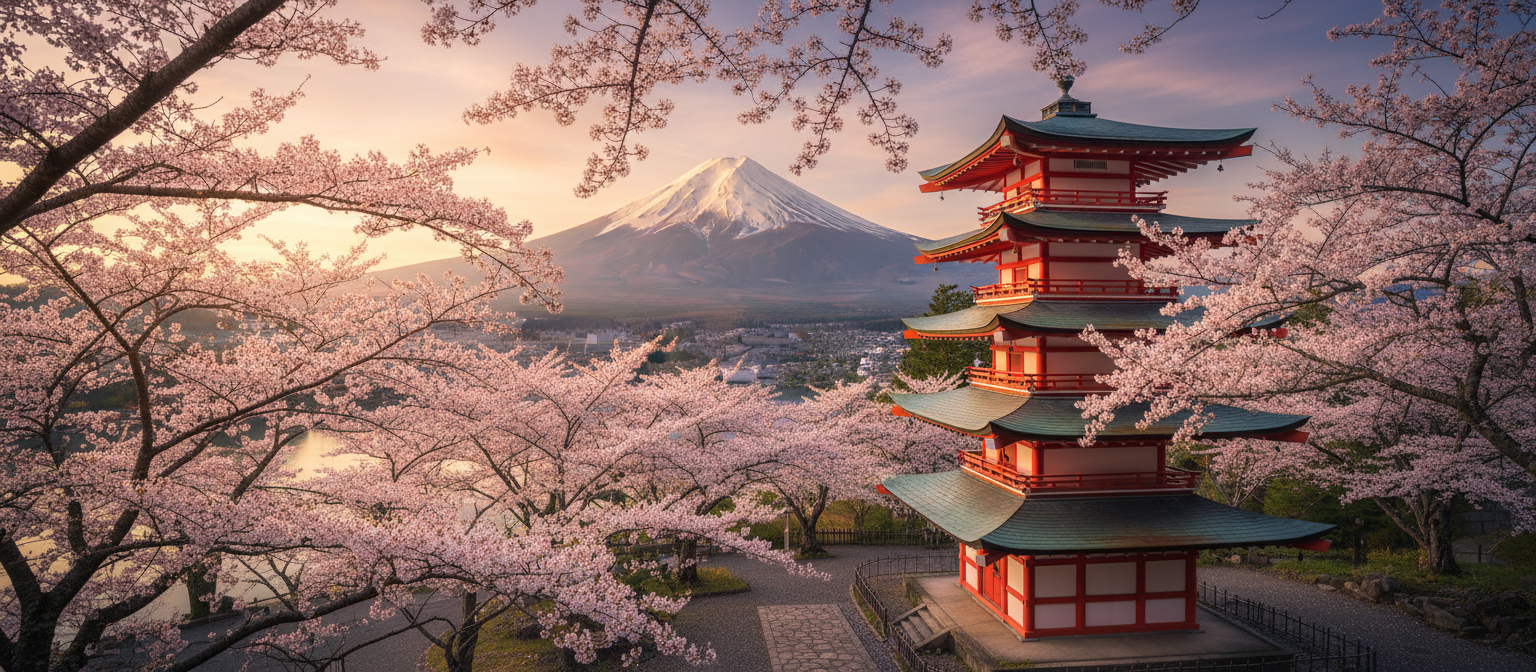
The Golden Route is the informal name for an itinerary running west along Japan's Pacific coast: Tokyo, then Kyoto, then Osaka. It is the path most first-time visitors to Japan take.
There are reasons these three cities form the core. The first is that three cities of quite different character are joined by a single railway line, the Tokaido Shinkansen. Connections are simple, which makes the route easy to follow on a first trip.
The second is the breadth of what there is to see. The Tokyo Convention and Visitors Bureau, which runs the city's official tourism site, divides Tokyo into several districts: the centre around Ginza and Nihonbashi; the east around Asakusa and Tokyo Skytree; the west taking in Shinjuku, Shibuya and Harajuku; the south with Odaiba and Roppongi; and the north with Ueno and Ikebukuro.
Kyoto, meanwhile, is divided into 19 areas on the Kyoto City Tourism Association's official site. Gion and Kiyomizudera, Saga-Arashiyama, the area around Kinkakuji, Fushimi — districts organised around temples and shrines, scattered across the city. The Osaka Convention and Tourism Bureau's official site covers Minami and Dotonbori, Kita and Umeda, Osaka Castle, Shinsekai and Tsutenkaku, and the Bay Area.
A modern metropolis, an ancient capital, and a city of food and nightlife. Covering all three in a single trip is why the Golden Route remains the default.
The three cities are linked by the Tokaido Shinkansen, operated by JR Central. According to the company's published figures, the line's maximum speed is 285 km/h, and the fastest journey from Tokyo Station to Shin-Osaka takes 2 hours 21 minutes (as of the March 2023 timetable).
Three train types run on the line: Nozomi, Hikari and Kodama. The difference is how many stations they stop at. Nozomi makes the fewest stops and is the fastest between Tokyo and Shin-Osaka. Kodama stops everywhere and takes the longest. Hikari sits between them.
Kyoto Station is the stop immediately before Shin-Osaka, so Tokyo to Kyoto takes slightly less time than Tokyo to Shin-Osaka. Kyoto to Shin-Osaka is a single stop, on the order of fifteen minutes. Times vary by train type and time of day, so treat these as a guide and check the official timetable for the service you plan to take.
Seats are either reserved or unreserved. A reserved seat fixes both your train and your seat, which suits large luggage or groups wanting to sit together. Unreserved seating lets you board any train, but you may not get a seat when it is busy. Seating arrangements sometimes differ during peak periods, so if your trip falls over a major holiday, check official information.
If you are travelling with a large suitcase, note the oversized baggage rules. According to JR Central, baggage whose three dimensions total more than 160 cm and up to 250 cm counts as "oversized baggage" and requires an advance reservation for a seat with an oversized baggage area. These seats are treated the same as ordinary or Green Car reserved seats, and the reservation carries no extra charge. Bringing such baggage aboard without reserving incurs a fee.
The Japan Rail Pass, issued by the JR Group, comes up in most discussions of travel in Japan. It is a special ticket covering JR lines nationwide, available according to the official site in 7-day, 14-day and 21-day versions, each in Green Car and ordinary car variants.
The most important caveat is that the Nozomi and Mizuho services on the Tokaido, Sanyo and Kyushu Shinkansen are not covered by the pass as standard. The official site states that using these trains requires, among other conditions, a separate ticket available only to Rail Pass holders. That Nozomi/Mizuho ticket can be bought only within the pass's validity period, covers only the section printed on it, and is valid for a single day. Ordinary pass holders can buy reserved or unreserved tickets; Green Car pass holders can also buy Green Car tickets.
In other words, holding a pass does not by itself let you board a Nozomi. Without the extra step, you are choosing between Hikari and Kodama. Hikari covers the three cities without difficulty, but takes longer than Nozomi.
Whether the pass is worth it comes down to how much you travel. On a seven-day itinerary moving between the three cities once each way, you will board the Shinkansen roughly twice, and buying individual tickets can work out more sensible. If you plan to add Hiroshima or Kanazawa partway through, or to double back over the same section, the case for a pass strengthens. Note also that the pass does not cover private railways, subways or most buses, so you will need an IC card for travel within cities. Prices are revised periodically, so compare against the current official prices for your own itinerary.
Seven days is a convenient length for these three cities. The standard split is three days in Tokyo, two in Kyoto and two in Osaka.
Tokyo gets three days because the city is large and moving between districts takes time. Asakusa and Shibuya, Ueno and Odaiba are areas of entirely different character, and covering them all in a day is not realistic. Bear in mind, too, that if your arrival counts as day one, you effectively have about two usable days.
Two days is the minimum for Kyoto. Because temples and shrines are scattered across the city, the basic approach is to assign the eastern Higashiyama area and the western Arashiyama area to separate days. Osaka's centre is relatively compact, and two days is enough to walk the main districts. It also works as a base for Nara or Kobe.
The key with intercity travel is to do it in the morning. Check out, board the Shinkansen, and you have the whole afternoon in the next city. Travel in the late afternoon and the day is effectively gone.
Travel from the airport into the city and check in. After a long flight there is little energy left, so limiting yourself to a walk around the neighbourhood is the sensible move.
Starting from Asakusa, work through the eastern districts: the area around Tokyo Skytree, Ryogoku, Nihonbashi. What makes this side interesting is how close the historic streets sit to the contemporary architecture.
Walk the western entertainment districts: Shibuya, Harajuku, Omotesando, Shinjuku. With time to spare, add Ginza, Tsukiji or Ueno. Many of these areas stay lively into the night.
Take a morning Shinkansen from Tokyo Station to Kyoto. Drop your luggage at the hotel, then spend the afternoon in Higashiyama, taking in Kiyomizudera and Gion. The district is full of slopes, so comfortable shoes are essential.
Saga-Arashiyama is among the busiest areas in Kyoto. Arriving early lets you walk it in relative calm. Head to the Kinkakuji area in the afternoon; adding Fushimi towards evening is another option.
Take a morning Shinkansen to Shin-Osaka. After dropping your bags, head for Osaka Castle, then to Minami and Dotonbori from late afternoon.
On the final day, work backwards from your departure time: shopping in Kita and Umeda, Shinsekai and Tsutenkaku, or the Bay Area with Kaiyukan. Leave plenty of time for the airport.
On a trip across three cities, how you handle luggage largely determines how comfortable it is. Japan has extensive luggage delivery services. Yamato Transport's official site sets out airport delivery between home and airport, round-trip delivery, temporary luggage storage and same-day delivery.
In practice, the usual approach is to send your bags ahead — Tokyo hotel to Kyoto hotel, Kyoto hotel to Osaka hotel — and travel with only what you need for the day. Given the oversized baggage rules above, sending a large suitcase ahead saves considerable trouble.
The thing to watch is timing. Delivery takes time, so as a rule you need to hand luggage over the day before. Same-day delivery is limited by area and time. Some hotels will handle receiving and sending on your behalf, so it is worth asking when you book.
The Golden Route varies in difficulty depending on when you travel. Cherry blossom season in spring and autumn foliage season are the busiest. Higashiyama and Arashiyama in Kyoto draw particularly large crowds, and at midday you may find yourself barely able to move. In these periods, covering the major sights early and spending the busier afternoon hours indoors or over a meal works well. Accommodation starts filling up months ahead.
In summer, heat and humidity take a real toll. Walking outdoors in the morning and late afternoon, and spending the middle of the day in museums or shopping centres, will preserve your energy. Drink often and leave slack in the schedule. Winter is relatively quiet, but the sun sets early, which shortens the hours available for anything outdoors.
During major holiday periods, domestic travel concentrates and reserved Shinkansen seats fill up early. If your trip overlaps with one, book your intercity travel before anything else.
The Golden Route also works in reverse, from Osaka to Tokyo: arrive at Kansai International Airport, move through Osaka, Kyoto and Tokyo, and depart from Narita or Haneda.
The advantage of the reverse is that you spend the first day in Osaka, which is relatively compact — no need to tackle Tokyo's size and complexity while still tired from the flight. The counter-argument is that you meet Tokyo's rail network at the end of the trip; if that worries you, the standard direction may feel safer.
On airports, flying into one and out of another — an open-jaw itinerary — works well here, since it removes the need to return to your arrival city. On the Tokyo side, Haneda is closer to the centre and quicker to reach; Narita has more international services. From Narita, the Narita Express, Skyliner and Keisei Main Line all run into the city. Kansai International Airport connects by rail to both Osaka and Kyoto.
The Golden Route works within seven days precisely because the Tokaido Shinkansen runs through it like a spine. Keep the three-two-two split, move between cities in the morning, and send your luggage ahead. Those three habits alone change how much you get out of the trip. Bear in mind that journey times vary by train type and time of day, and that the Japan Rail Pass does not cover Nozomi and Mizuho as standard, and adjust your plan accordingly.
Information in this article is current as of August 2026. Journey times, fares and pass conditions are subject to change. Please check official information from each operator before travelling.
 Facebook
 X (Twitter)
 LINE


